
Pelvic position and split squat
Tips on how to perform a split squat depending on the pelvic orientation and pelvic motion

Pelvic orientation and relative motion are two concepts that give room for much discussion. In this blog, I briefly explain the difference between the absolute movement of these bones in space, how they move about each other, and how this can be important when we perform a split squat.
The pelvis is represented by various bone, ligament, fascial, and muscle structures but not only. For the sake of the conversation, we will only talk exclusively about bone structures, more precisely about two components: the sacrum and the ilium.
Like other structures of our body, the pelvis is subject to movements in different planes of motion: sagittal, frontal, and transverse. it is also subject to translational movements considering the postural alignments of our body. if you look inside this complex you can also detect minimal movements between the different bone structures. The sacroiliac joint that connects the sacrum and the ilium is a rigid joint but still has a degree of mobility of about 3° in flexion-extension (nutation and counternutation). These absolute and relative movements at the proximal level of our body have a strong influence at the distal level on joints such as the shoulders, hips, and knees. When our pelvis is not in a neutral position, the pelvic and diaphragmatic floors are also not in a centralized and "cylinder" communication position, causing a reduction in performance and an increased risk of injury.
As anticipated before we are talking about a very vast and complex topic. Today we're just going to talk about these orientations and relative movements and how we can adapt this to the split squat exercise at the gym.
Pelvic orientation
The pelvic orientation is considered its absolute movement, i.e. the position that the pelvis can have in space and it’s not related to the movement within the pelvis (e.g. sacroiliac joint).
These different orientations are related to their planes of motion:
Sagittal plane:
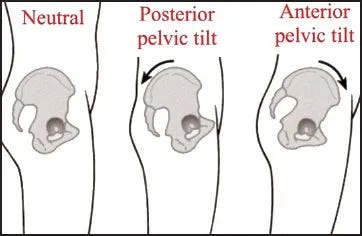
anterior pelvic tilt (APT): when the oblique angle of the pelvis from the PSIS (Posterior Superior Iliac Spine) and the ASIS (anterior Superior Iliac Spine) exceeds 13.0 ± 4.9°.1
posterior pelvic tilt (PPT): when the oblique angle of the pelvis from the PSIS (Posterior Superior Iliac Spine) and the ASIS (anterior Superior Iliac Spine) is less than 8.9 ± 4.5°.
I believe that the normal pelvic tilt angle is about 5-10 degrees but it’s important to consider the gender and the whole posture before making any assumption.
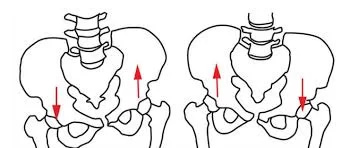
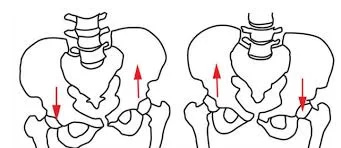
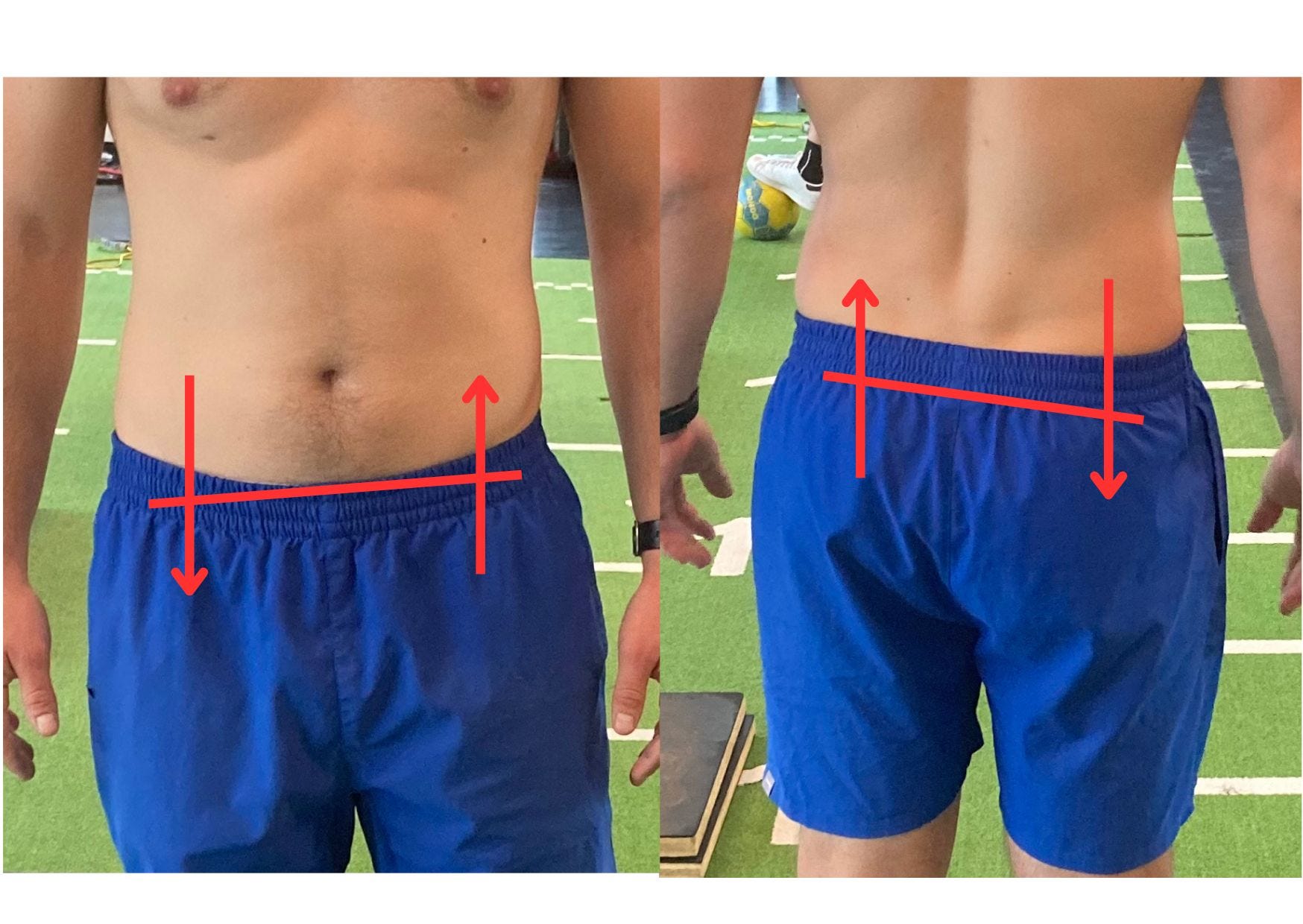
Frontal plane: right or left lateral pelvic tilt occurring when one hip hikes and the other one drops.
Transverse plane:
Pelvic rotation: represents when one hip is more forward than the other one.
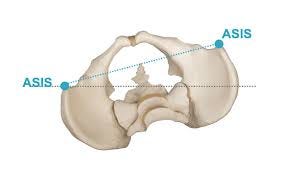
Translation: the pelvis can have a translation in space forward-backward (e.g: sway back posture) and right-left without affecting the other planes
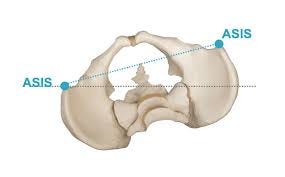
Pelvic Relative Motion:
The intra-pelvic motion is represented by the movements of the sacrum and the ileum and the relationship of motion between these two bones.
The ileum moves in two directions on three different planes of motion. These bones can move in adduction - posterior extension - internal rotation (depending on which plane in consideration); or moves in abduction - posterior flexion - external rotation (depending on which plane in consideration).
The sacrum instead includes movements of counternutation and nutation, more precisely when the tailbone moves forward and backward respectively.
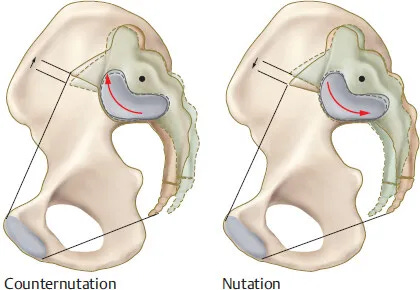
These two bones move about each other because the movement of the nutation of the sacrum is associated with the movement of adduction and internal rotation of the ilium. Conversely, the movement of counternutation is connected to the movement of abduction and external rotation of the ileum.
I consider a total range of motion of 90-100 degrees combining ER and IR of the hip to understand if there is a relative movement within the pelvis or if there is an absolute orientation of the pelvis.
Our goal as strength and conditioning coaches and physical therapists is to detect the baseline position of this structure and chose the right exercise to bring our clients or athlete more to a neutral state to increase performance and reduce injuries.
The first step as a practitioner is detecting the baseline position of the pelvis with visual and postural assessments. The second step is to choose the right exercise to restore the neutrality of the pelvis. the third step is to re-assess your clients to see the effectiveness of your work and hold this neutrality for a longer period.
Breathing, mobility, or stability exercises are great tools to restore pelvic neutrality. However, strength exercises like split squat can be great weapons to push your pelvis in your desired direction.
All these examples below can help you to have access to certain ranges of motion that are not reachable with classic the split squat. However, they don’t have to become variations that substitute this classic unilateral strength exercise for all your training sessions.
Split squat and…
Posterior Pelvic tilt:
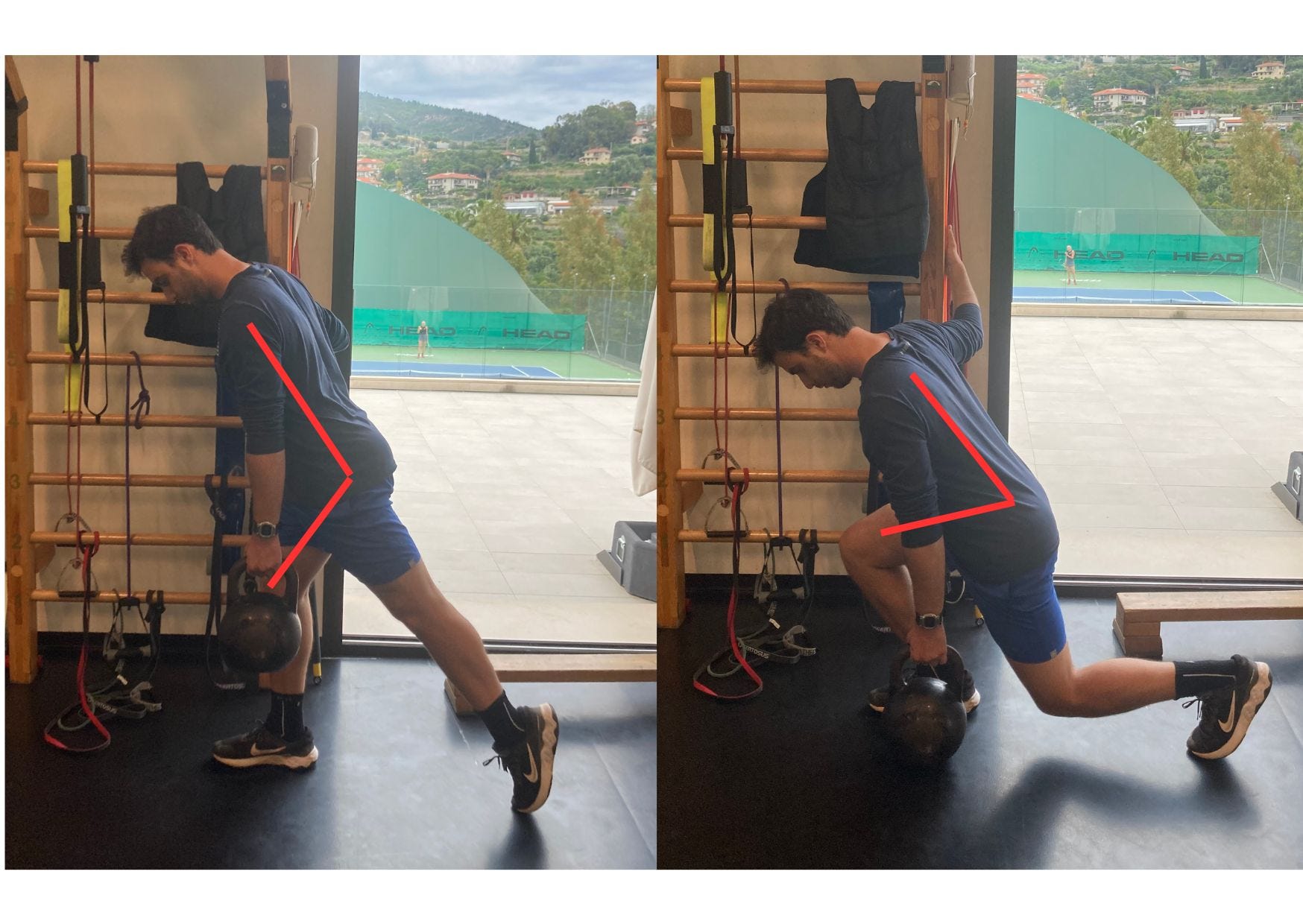
People with PPT would benefit from some anterior pelvic tilt and posterior hip expansion. The PPT creates posterior hip compression and loss of hip IR. Hinge movements like deadlifts or Short-stance split squat put the hip in a more hinge position that allows your athlete to restore more hip IR, especially on the front leg.
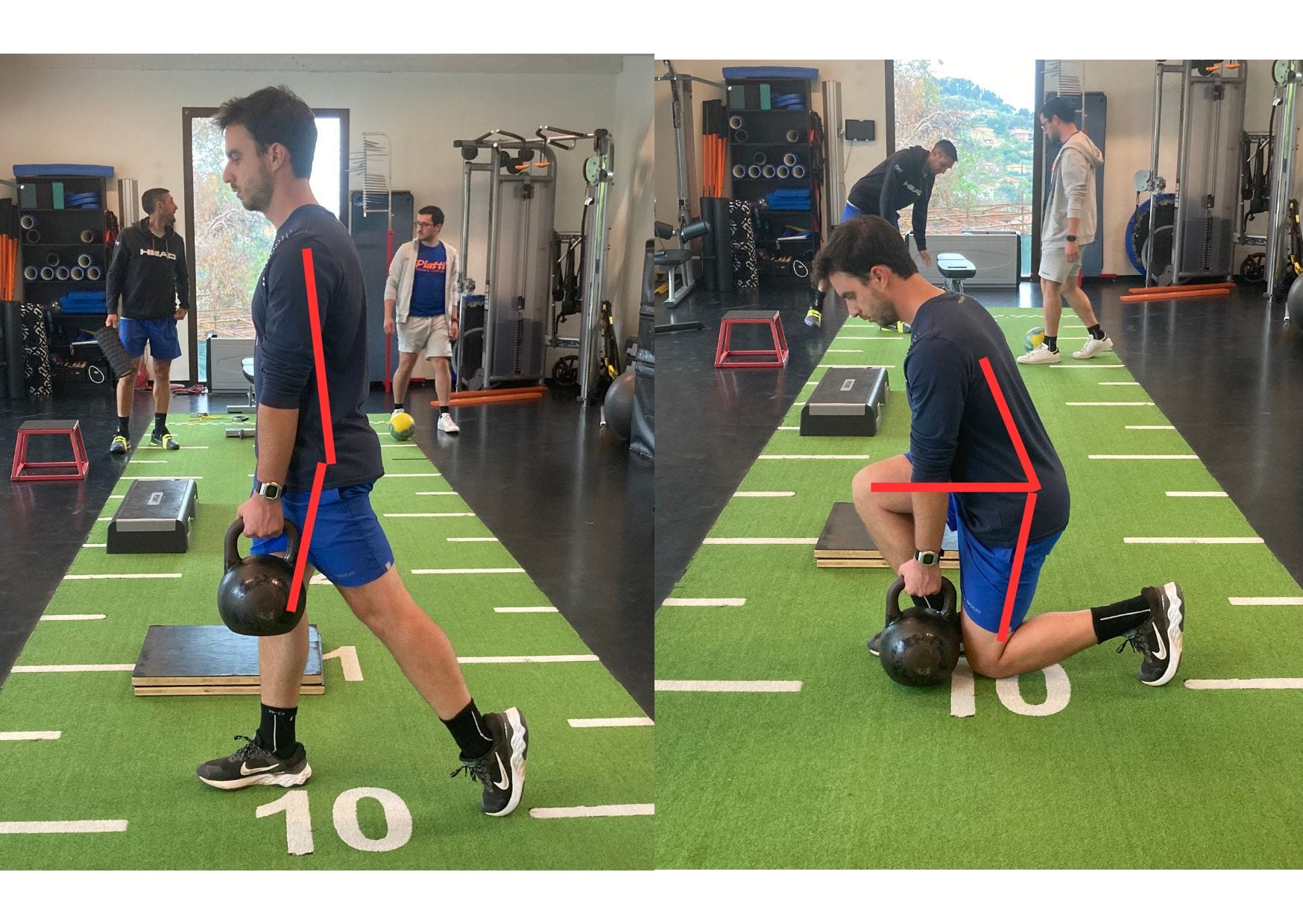
Anterior Pelvic tilt:
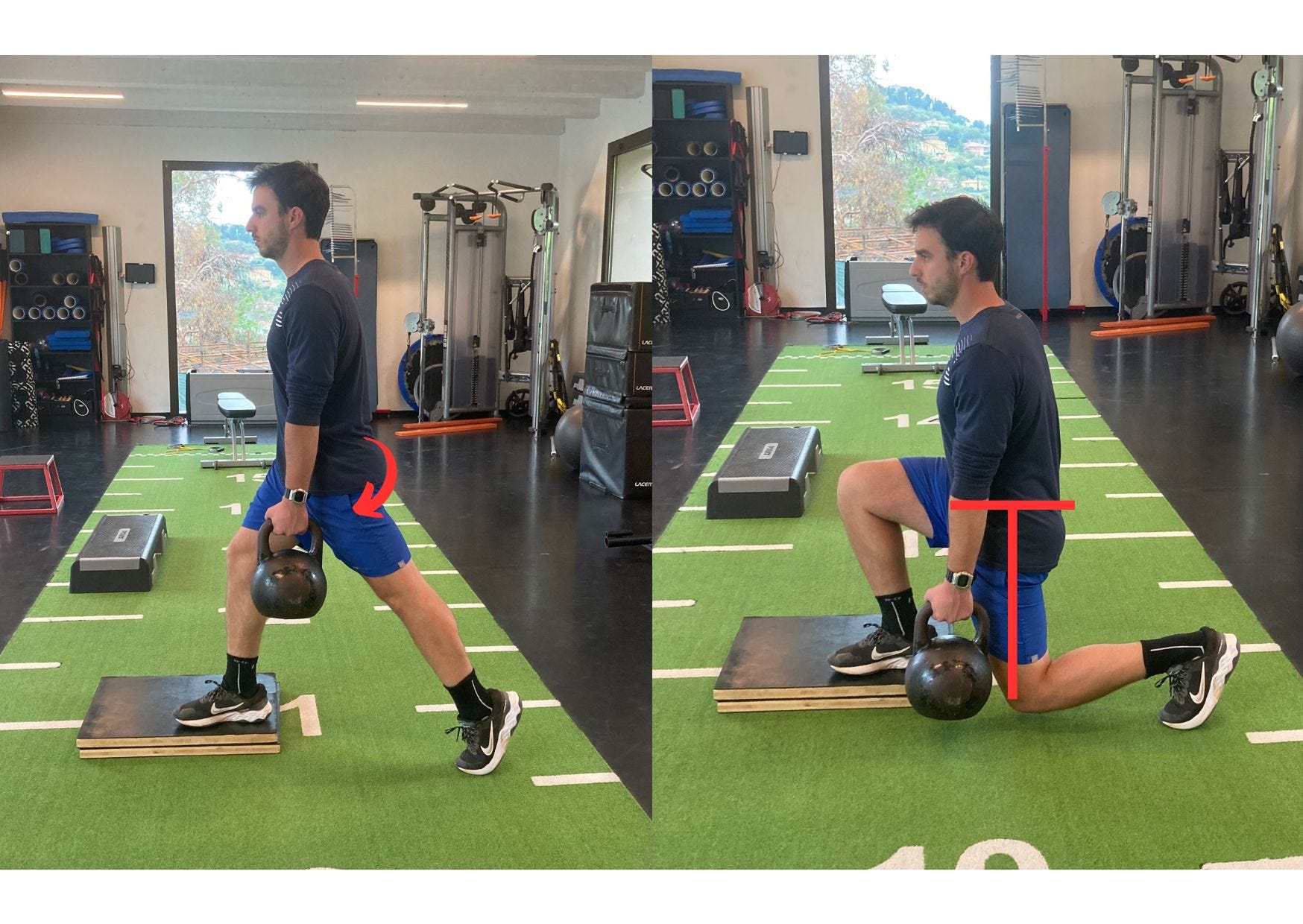
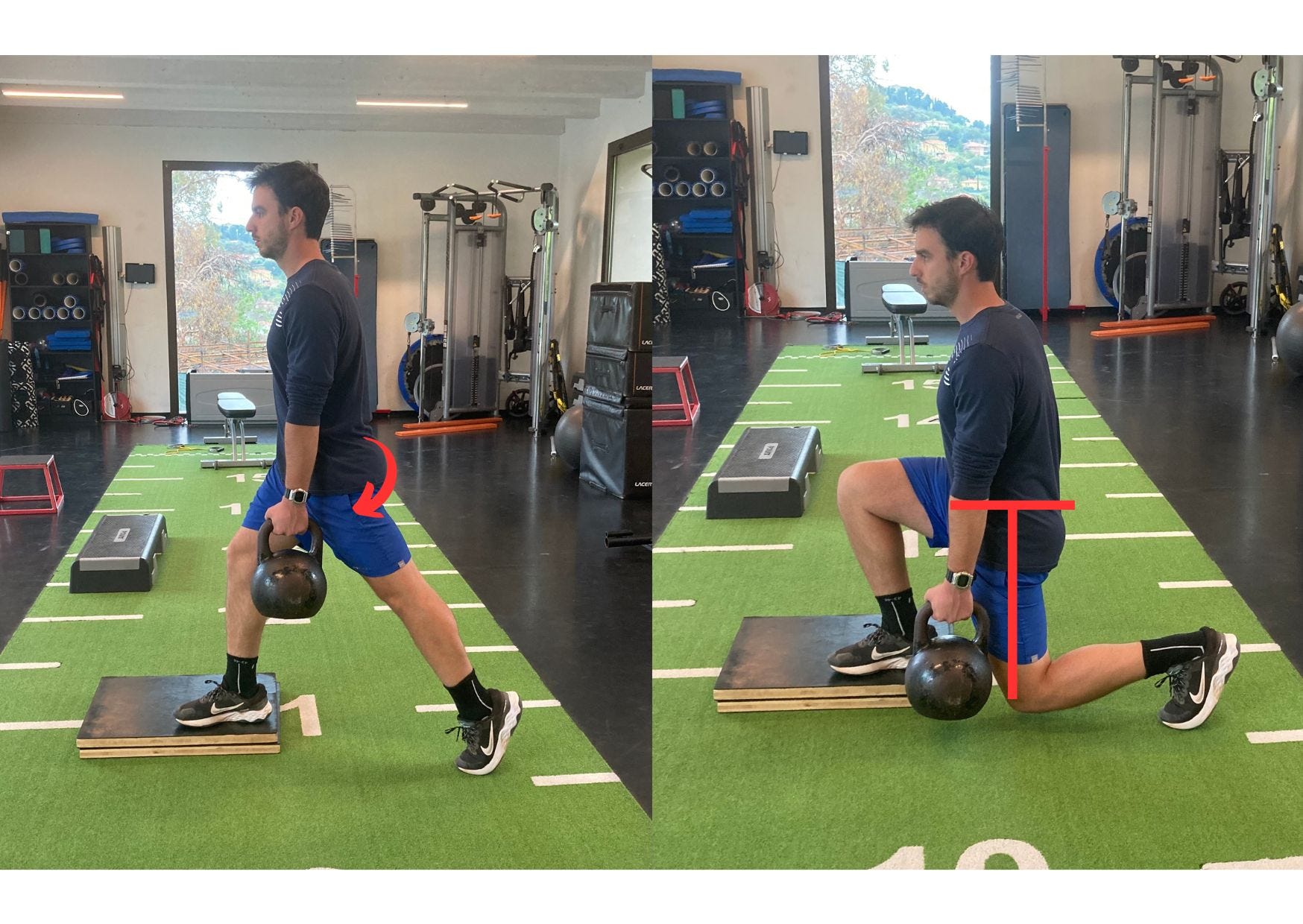
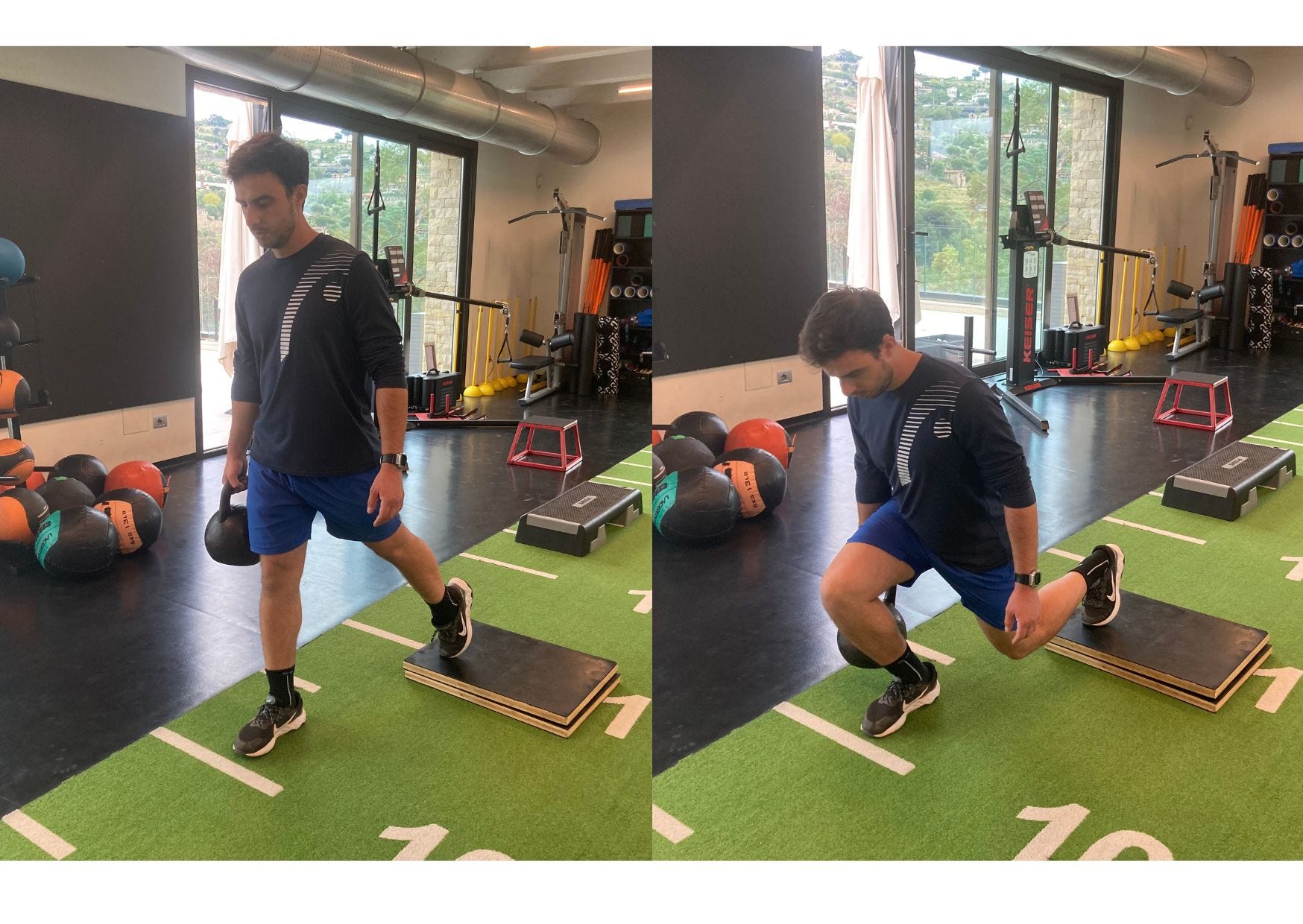
People with APT would benefit from some posterior pelvic tilt and any tools that help the sacrum to counternutate. Front foot elevated split squat can be a great exercise for these people for two reasons. First, is going to reduce the movement of the tibia forward and consequently, it would be easier to reach a deeper degree of hip flexion and counternutate the sacrum. Second, the “down” projection of people in APT is not directly down into the ground but towards down-back. The front foot elevation will bring your pelvis more to a posterior orientation because the downward projection of your hip is more vertically into the ground.
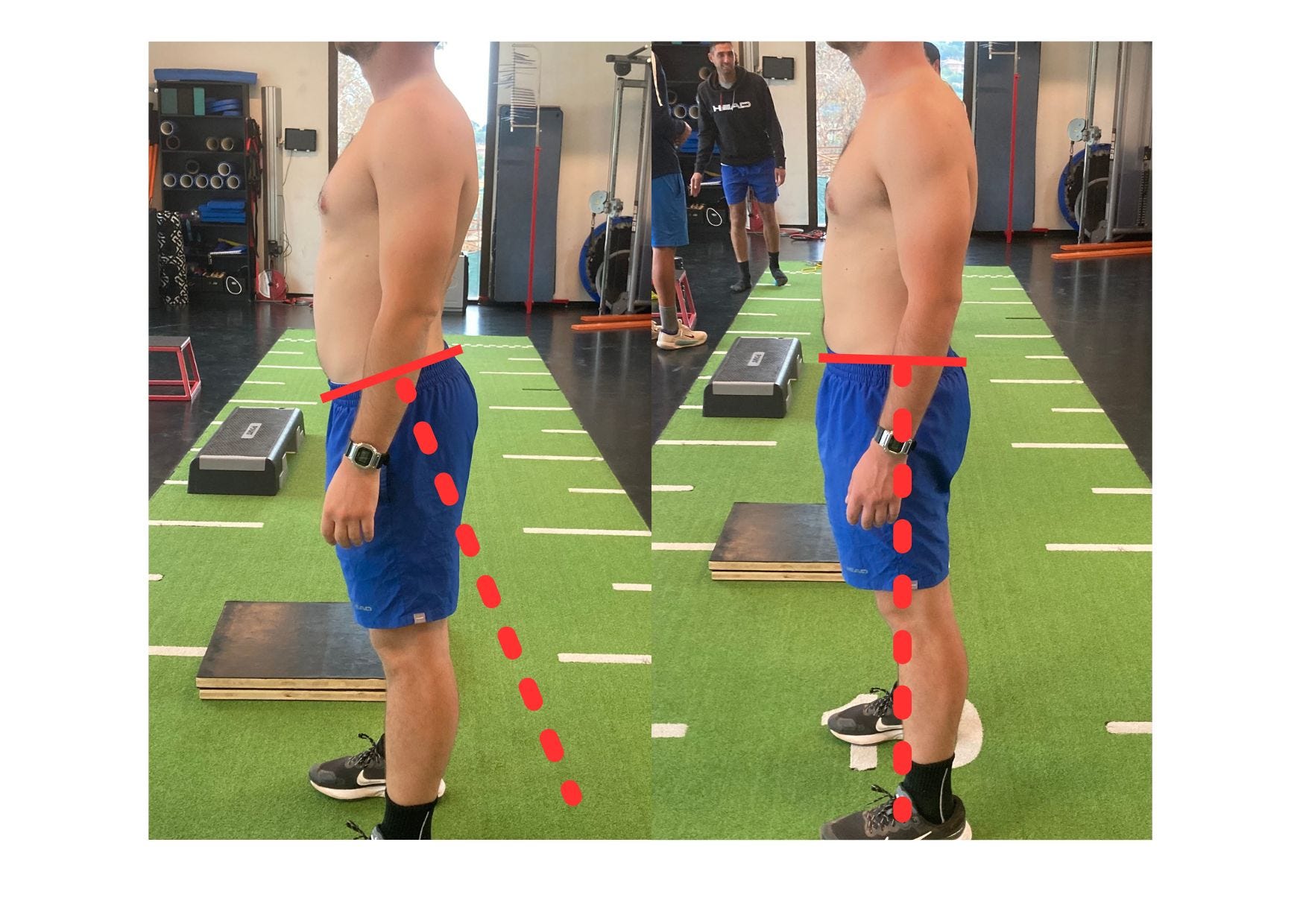
Right or Left lateral Pelvic Tilt
People with lateral pelvic tilt have one hip that hikes and the other one that drops down. This height difference can be simply bridged by elevating the lower hip.
Right or Left Rotation
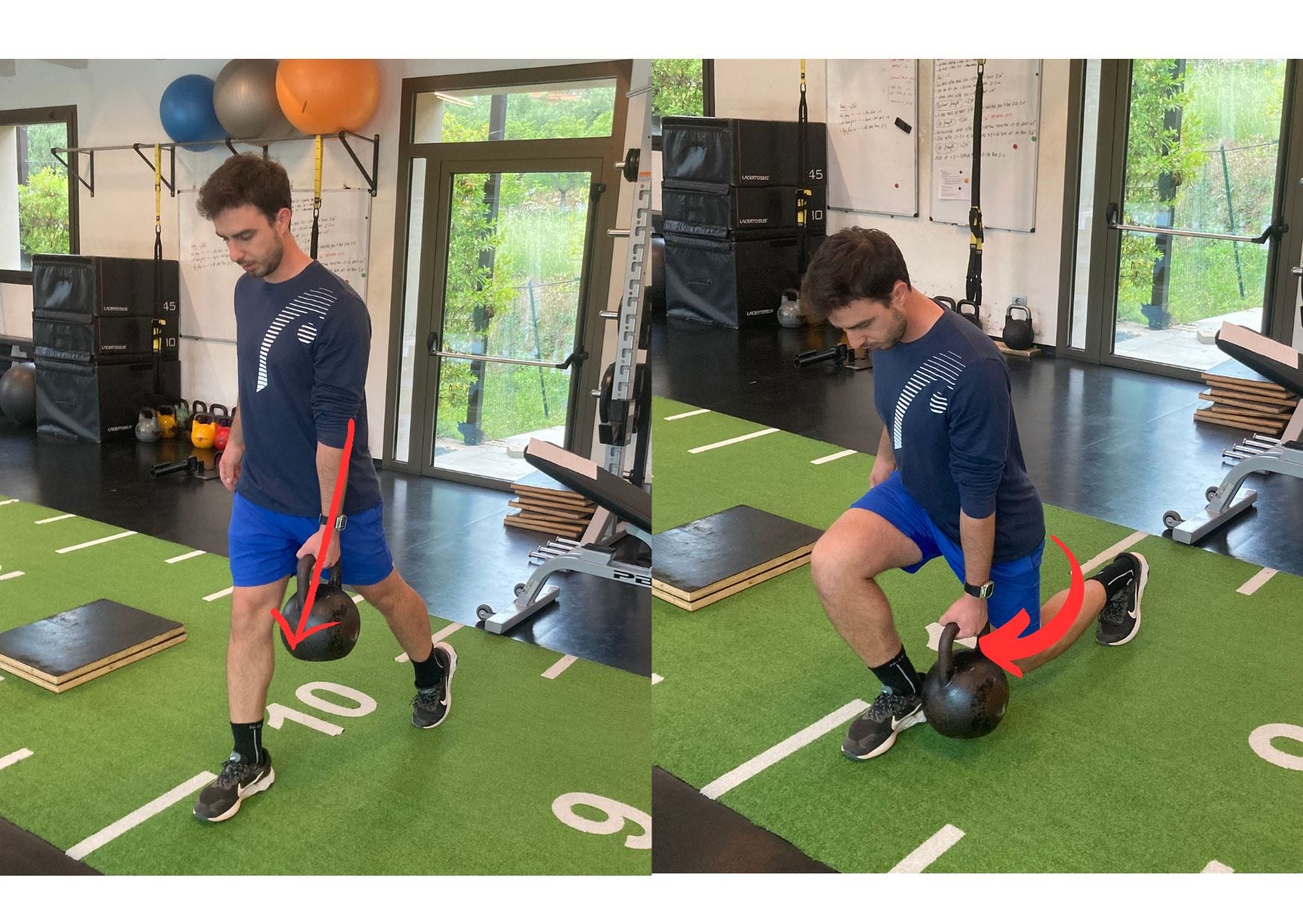
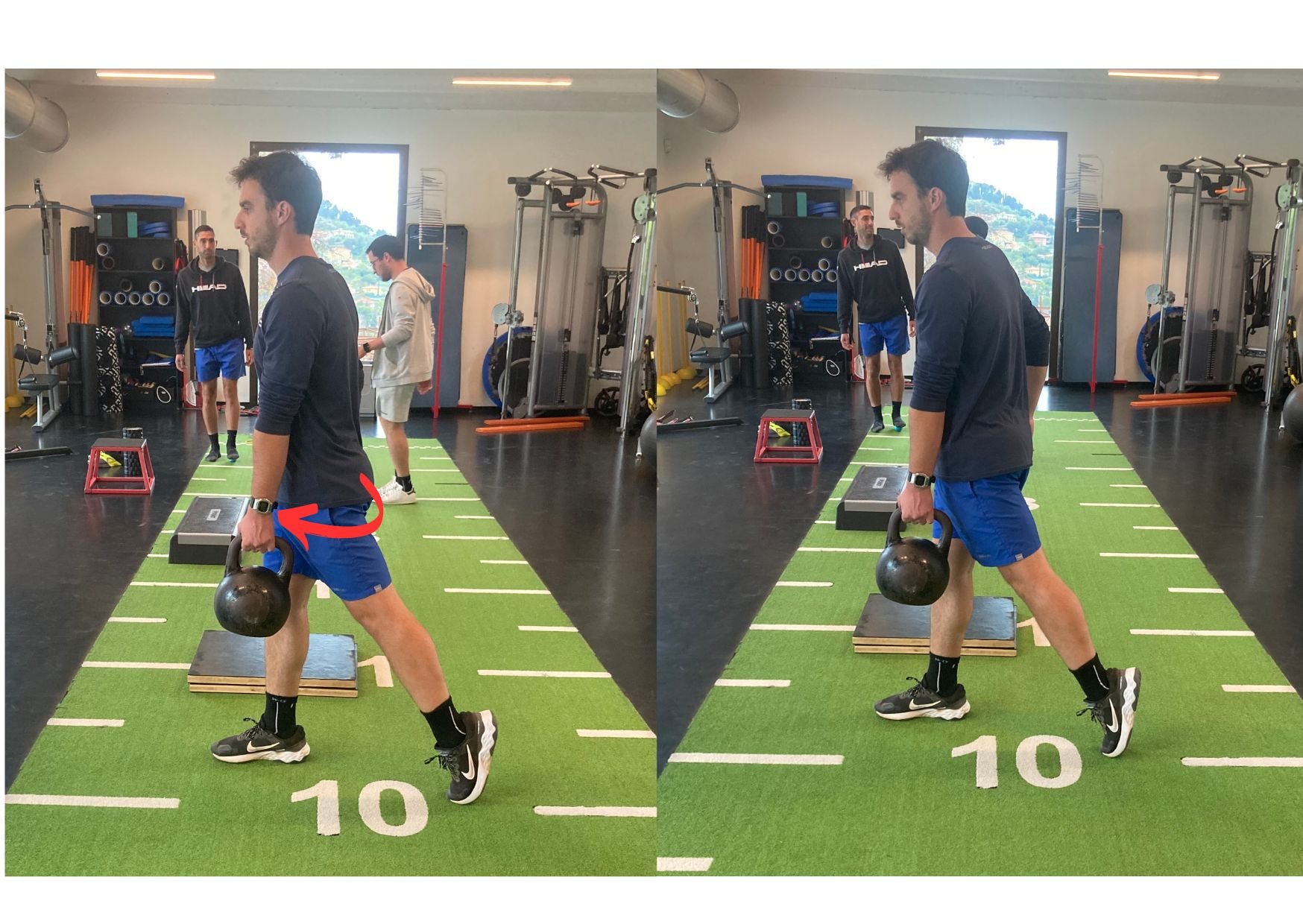
There are different ways to push your hip forward or backward depending on your need. The first one is using more hinge movement on the hip I want to move backward using a Short stance split squat or hinge squat. The second one is using a controlateral load to open more the hip posteriorly and have more access to the internal rotation. The third method is cueing more hip shift on the front leg to create more IR of the femur relative to the ileum.
Backward or Forward rotation
Using front foot elevation (see the picture above: Front Foot Elevated Split Squat) your body will bring your body backward; controversially exercise in rear foot elevate with lead your body to put more weight forward.
Posterior compression
People with posterior hip compression usually need strategies to access more intrapelvic IR. Hinge movement (see the picture above: Hinge squat - Short stance split squat) and contralateral load (see the picture above: Controlateral load)are both great tools to find more posterior expansion and movement of the ileum on the head of the femur.
Anterior compression
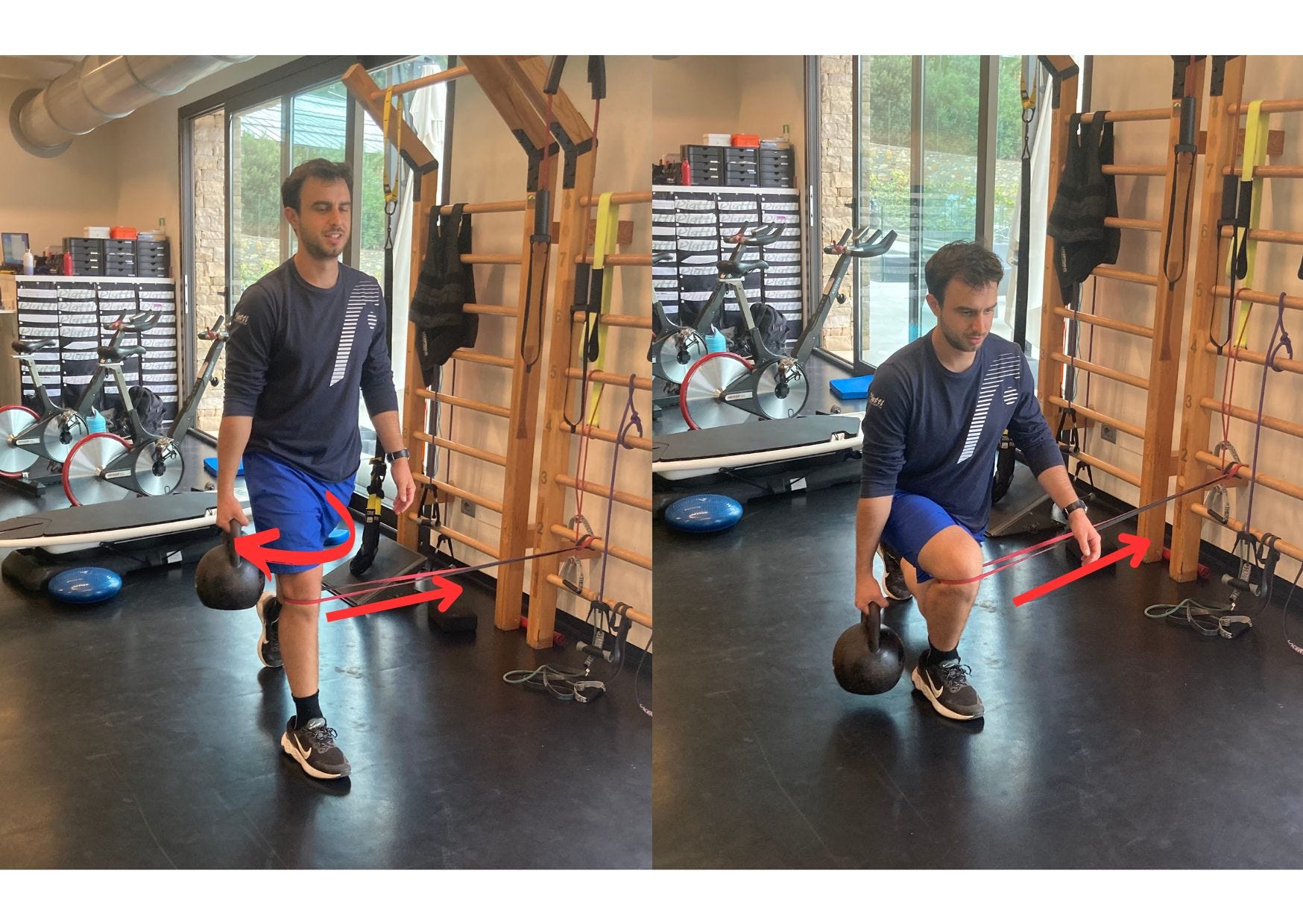
People with anterior hip compression usually need strategies to access more in intrapelvic ER. Front foot elevated split squat or resistance with bands that pull your knee in (e.g. Ipsilateral Squat w/RNT)help you to reach more anterior expansion and stimulate more intrapelvic ER, respectively.
These are only a few examples to restore the neutral position of the pelvis. These are not the only exercises because there are many variations and tools out there. My suggestion is to try to use every tool you know to restore neutrality and joint centralization because this will help your player to have more access to all the movement planes. However, these exercises don’t have the goal to substitute the classic split squat or another movement that would increase performance parameters like strength or power. Be aware of how to use these variations and don’t start to overthink; teach how to do a split squat first and then think about how can you play with it.
https://www.ncbi.nlm.nih.gov/pmc/articles/PMC5342962/